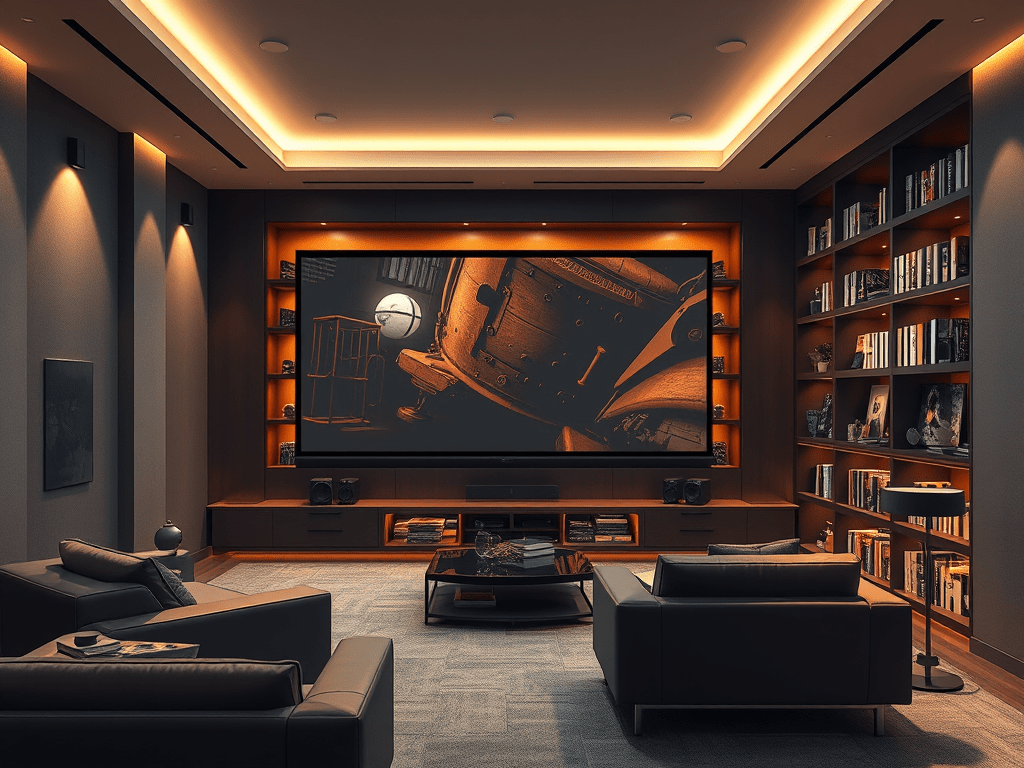
Own Your Media. Design Your Independence.
Streaming platforms made media convenient.
They did not make it permanent.
Today, even the most sophisticated households face a growing reality:
- curated content disappears without notice
- licensing agreements change
- quality is compressed for mass distribution
- libraries are fragmented across multiple services
- personal ownership has been replaced with temporary access
For collectors, enthusiasts, and high-performance households, this creates a fundamental problem:
You do not truly control the media experiences that matter to you.
A Different Approach to Media Ownership
Private Media Architecture designs bespoke private streaming infrastructure for clients who value:
- permanence
- performance
- discretion
- personal curation
- long-term digital stewardship
Instead of relying on subscription ecosystems, clients invest in systems that allow them to:
- preserve their media libraries indefinitely
- curate collections intentionally
- stream content privately across residences and devices
- maintain full control over quality, availability, and access
This is an infrastructure decision. Say no to all streaming services.
Designed for Sophisticated Clients
Private media infrastructure is not a mass-market solution.
It is best suited for individuals and households who:
- invest in long-term ownership rather than short-term access
- value performance and reliability
- maintain large media collections
- operate home theaters or screening environments
- manage multiple properties
- prefer privacy and discretion
- crave engineered solutions over subscription dependency
Convenience alone is not enough.
You want certainty.
The Value of Personal Curation and Permanence
A privately designed media system allows clients to build libraries that reflect:
- personal taste
- cultural interests
- professional needs
- family heritage
- artistic appreciation
Unlike streaming platforms, these libraries are not governed by licensing cycles or corporate strategy.
They are:
- curated intentionally
- preserved reliably
- accessible on demand
- expandable over time
For many, this represents a shift from passive consumption to active stewardship.
Physical Media Ownership Is Valuable. But Not Scalable.
For decades, collectors have relied on physical formats such as DVDs, Blu-ray discs, and CDs to build personal media libraries.
These formats offer important advantages:
- true ownership
- high-quality audio and video
- permanence independent of subscription services
- collectible and archival value
However, physical media introduces practical limitations as collections grow:
- storage space requirements increase significantly
- manual organization becomes time-consuming
- content is not easily accessible across rooms, devices, or residences
- playback depends on specific hardware availability
- large libraries become difficult to manage, preserve, and expand
Private media infrastructure allows people to preserve the benefits of ownership while enabling a modern, scalable experience.
By designing systems that support digital library management, centralized storage, and secure streaming access, physical collections can evolve into curated, high-performance media environments that remain accessible for years to come.
This approach future-proofs ownership.
A Long-Term Solution in a Changing Media Landscape
Streaming platforms will continue to evolve.
Content catalogs will continue to change.
Subscription models will continue to fragment.
Private infrastructure offers stability in an unstable ecosystem.
Properly designed systems can:
- scale with evolving technology
- support future media formats
- integrate new distribution methods
- remain operational for decades
Your media library becomes a durable digital asset.
Commitment to Client Values
Private Media Architecture operates with a clear philosophy:
- infrastructure should serve ownership
- technology should enable independence
- systems should be designed for longevity
- recommendations should remain vendor-neutral
- engagements should respect client discretion
Each system is engineered with the understanding that private media environments are deeply personal investments.
Begin the Conversation
If you are exploring a long-term approach to media ownership and private streaming infrastructure, you are invited to request a consultation.

